

Sound level measurement in Dubai is an on-site survey that records noise levels in decibels (dB) and checks them against the limit that applies to a building, workplace or community. Malcots carries out sound level measurement for contractors, fit-out companies, facility managers, consultants and property owners in Dubai and across the UAE, using calibrated sound level meters and noise dosimeters and a written noise survey report. To book a survey, call or WhatsApp Malcots, or send the quote form at the end of this page.
What a Sound Level Measurement Survey Covers
A sound level measurement survey records how loud a space or a noise source is, how long the noise lasts and where it comes from, then compares the readings with the limit or design criteria that apply. A typical Malcots survey measures:
- Ambient (background) noise levels in the space or at the site boundary
- Continuous equivalent sound levels (Leq) over the measurement period
- Peak sound pressure levels from impact or start-up events
- Employee noise exposure over a working shift
- Area-specific readings at plant, equipment and sensitive rooms
Two kinds of measurement are used. An instantaneous measurement captures noise at a specific moment, such as a chiller starting or a generator running under load. Long-term monitoring records noise over hours or days to show how levels change with operations, traffic and occupancy. The survey also records the frequency, duration and source of the noise, because two readings at the same decibel level can need very different fixes.
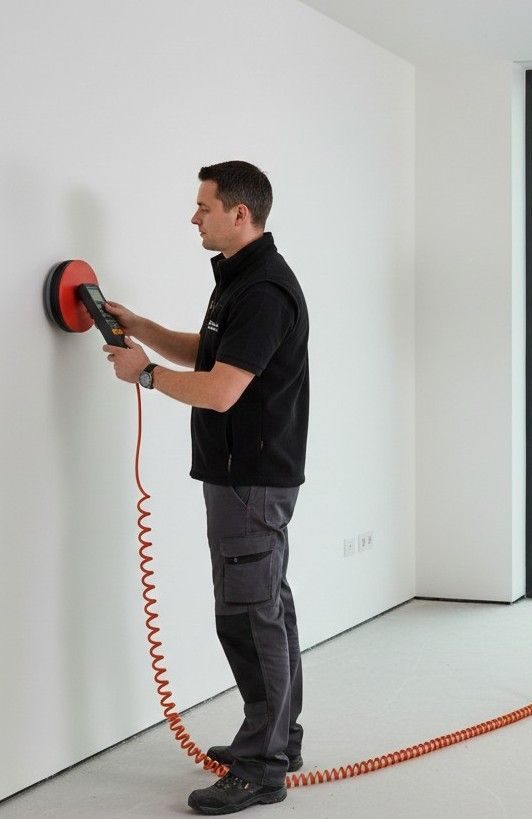
Where Sound Level Measurement Is Required in Dubai
Sound level measurement is required wherever a client, consultant, landlord, authority or employer needs written proof that noise is within an agreed or regulated limit. In Dubai, environmental and community noise limits are set by Dubai Municipality, and projects in Abu Dhabi follow Abu Dhabi EHS requirements. The surveys Malcots is asked for fall into four groups.
Fit-out handover noise checks
Consultants and landlords often ask for noise readings before they accept a completed fit-out. Malcots measures background noise in offices, retail units, clinics, hotel rooms and apartments with the HVAC and MEP systems running, so the handover file shows the space meets the criteria in the project specification. The guide to what a fit-out noise survey checks explains the process in more detail.
Workplace noise exposure
Employers in factories, workshops, warehouses, commercial kitchens and plant-heavy facilities need to know how much noise staff are exposed to over a shift. Personal noise dosimeters combined with area readings identify high-risk zones, noisy equipment and the tasks where hearing protection, maintenance or schedule changes are needed.
Plant room and MEP equipment noise
Chillers, cooling towers, air handling units, pumps, generators and fans are common noise sources in Dubai buildings. Malcots takes readings at the plant, in adjacent rooms and at the building boundary, which helps the MEP contractor or facility manager choose between maintenance, acoustic treatment or a change to the operating schedule. Plant noise is often checked during HVAC testing and commissioning, when the systems are already running at design conditions.
Residential and tenant noise complaints
When residents or tenants complain about noise from a neighbouring unit, rooftop plant or a nearby operation, an independent survey replaces opinion with measured data. The noise survey report gives building management and owners a documented basis for the next step, whether that is a repair, an acoustic barrier or a change in operating hours.
How Malcots Carries Out Sound Level Measurement
Every Malcots sound level measurement follows the same six steps, so results are accurate, repeatable and accepted by the people who review them.
- Scope the survey. Agree the purpose (handover, exposure, plant noise or complaint), the measurement locations, the limit or criteria and the operating conditions to test under.
- Prepare calibrated instruments. Select the sound level meters and dosimeters for the job and confirm their calibration status before the visit.
- Record site conditions. Note each measurement position, the time, weather for outdoor readings and which equipment and operations are running, since reflections, background noise, weather and operational changes all affect results.
- Take the readings. Record instantaneous readings at each point and run long-term monitoring or personal dosimetry where exposure over time matters.
- Analyse the data. Compare Leq, peak and exposure figures with the applicable UAE regulations and the project criteria.
- Report and recommend. Issue the noise survey report with findings, any exceedances and practical recommendations.
Instruments Used for Sound Level Measurement
Malcots uses calibrated sound level meters for area and point readings and noise dosimeters for personal exposure measurement. Professional instruments are used instead of phone apps or basic handheld meters because the results must be accurate, repeatable and acceptable to authorities and auditors.
| Instrument | What it measures | Typical use |
|---|---|---|
| Sound level meter [CONFIRM: make, model and class] | Ambient level, Leq and peak sound pressure at fixed points | Fit-out handover, plant rooms, site boundaries, complaints |
| Noise dosimeter | Personal noise exposure over a shift | Workplace exposure assessments |
Instrument specifications and calibration details are listed in every report, so the reader can see exactly how the data was produced.
The Noise Survey Report Malcots Delivers
Every sound level measurement ends with a written noise survey report that a consultant, landlord, auditor or authority can review. The report includes:
- The purpose and scope of the survey
- Measurement locations and the conditions at the time of each reading
- Instrument specifications and calibration details
- Recorded sound levels and exposure durations
- Comparison with the applicable limits [CONFIRM: whether results are reported against Dubai Municipality limits]
- Conclusions and recommendations, such as acoustic barriers, equipment maintenance, operational scheduling or personal protective equipment
A well-documented report protects the owner or employer during inspections, disputes and long-term compliance reviews, and gives the contractor a clear list of what to fix.

Turnaround, Scheduling and Cost Factors
Malcots schedules sound level measurement around the operating conditions that matter for the survey, which can mean readings during peak operation or with specific plant switched on. The noise survey report is issued [CONFIRM: report turnaround time after the site visit].
The cost of sound level measurement in Dubai depends on the scope rather than a fixed rate. The main cost factors are:
- Number of measurement locations
- Duration of monitoring, from spot readings to long-term logging
- Number of employees fitted with personal dosimeters
- Access and timing requirements on site
- Level of detail and analysis required in the report
Send the location, purpose and number of areas through the quote form and Malcots will confirm the scope and price.
Related MEP Testing Services from Malcots
Sound level measurement sits within the wider range of MEP testing and commissioning services that Malcots provides in Dubai. Projects that need a noise survey often also need duct leakage testing on the ventilation system and infrared thermography on electrical panels and plant. For background on noise rules and measurement methods, read the guide to sound level measurement in Dubai.
Sound Level Measurement FAQs
What is the difference between a sound level reading and a noise survey?
A sound level reading is a single measurement at one point and one moment. A noise survey is a planned set of readings at agreed locations and times, with calibrated instruments, recorded conditions and a written report that compares the results with a limit.
Who needs sound level measurement in Dubai?
Fit-out contractors and consultants preparing handover files, employers assessing staff noise exposure, facility managers dealing with plant noise, and building owners responding to resident or tenant complaints are the most common clients for sound level measurement.
How long does a sound level measurement take on site?
Site time depends on the number of locations and whether the survey needs spot readings, long-term monitoring or shift-long dosimetry. Spot readings at a few points take far less time than monitoring a full operating cycle. Malcots confirms the expected site time when the scope is agreed.
What should be running during the survey?
The equipment and activities that create the noise in normal use should be running, for example the HVAC system at design load for a handover check or the full production line for a workplace exposure survey. Agreeing this at the scoping stage keeps the results representative.
How much does sound level measurement cost in Dubai?
The price depends on the number of locations, monitoring duration, number of dosimeters and the report detail required. Send your requirements through the quote form or call Malcots for a scoped quotation.
